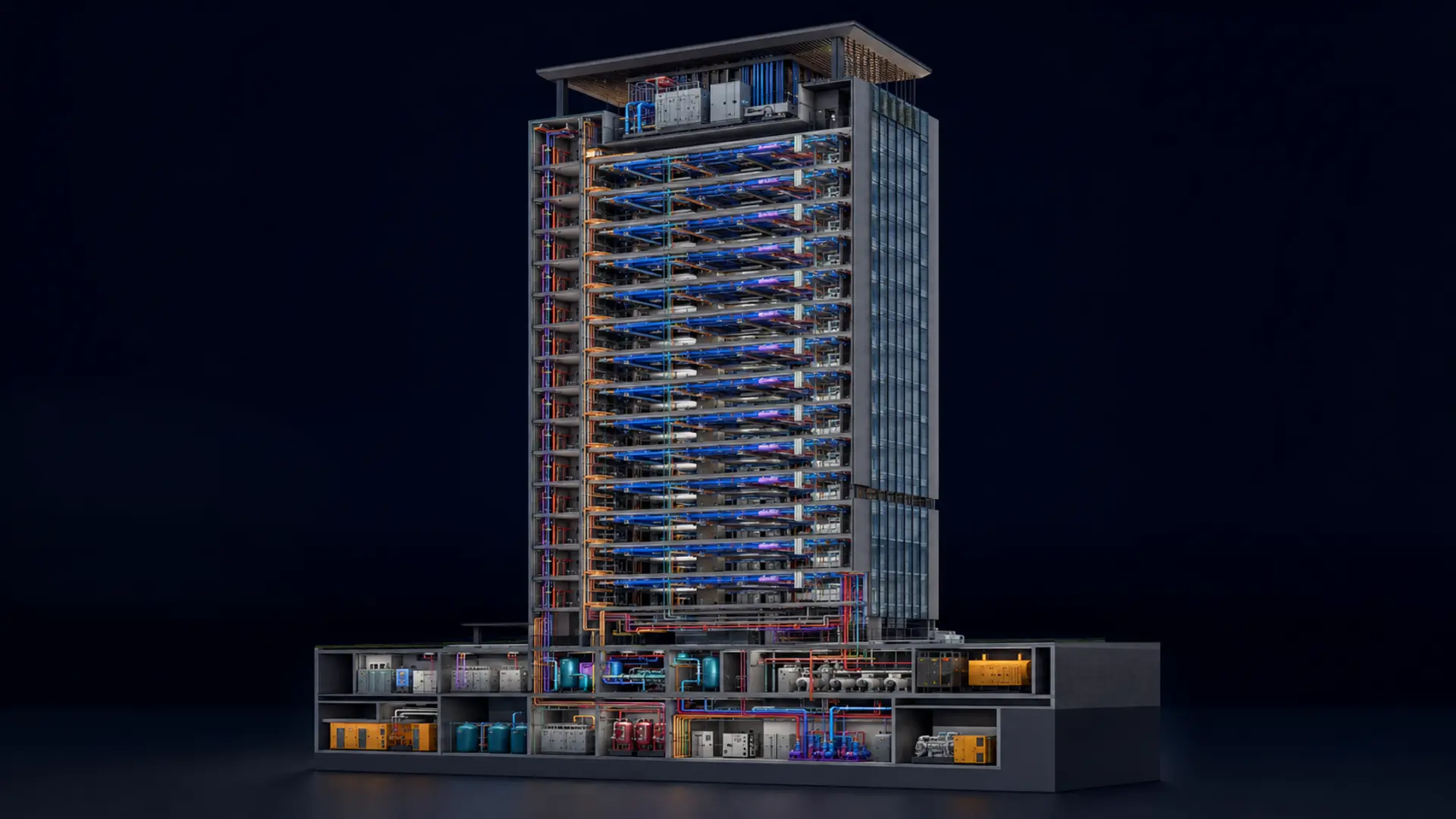
Operational visibility
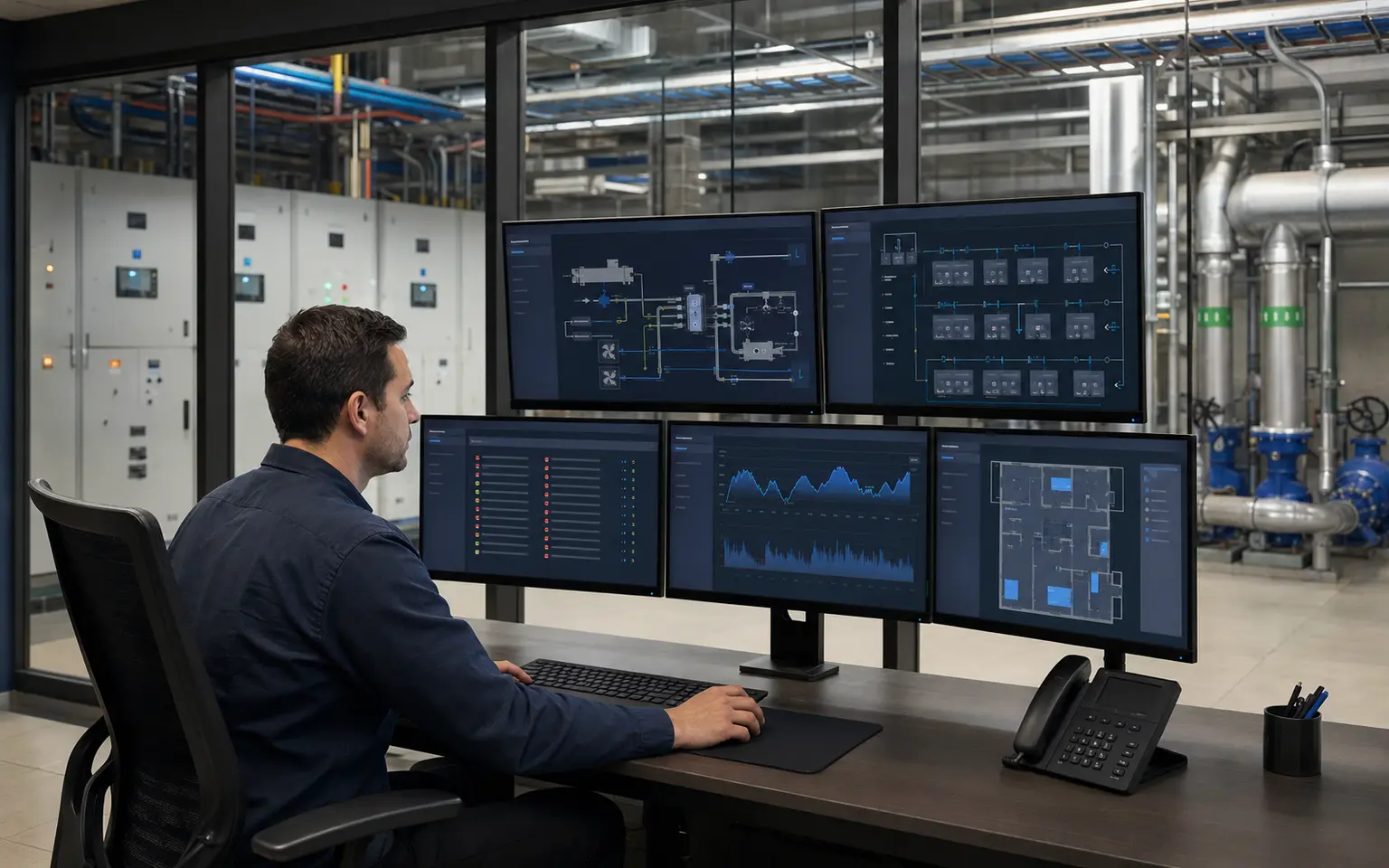
Status, measurements, setpoints and faults are organised for rapid building understanding.

BMS · AXORA EXPERTISE
Make technical installations visible, controllable and analysable through coherent supervision.
Definition of interfaces, operating sequences, alarms, histories and dashboards for building systems.
DISCIPLINE OUTCOMES
AXORA connects point matrices, protocols, sequences, alarms, trends, graphics, rights, cybersecurity, testing and operation in a complete BMS architecture.
Status, measurements, setpoints and faults are organised for rapid building understanding.
Sequences, calendars, modes and priorities connect equipment to use.
Priorities, delays, acknowledgements, escalation and responsibilities prevent alarm overload.
Trends, reports and indicators are structured around operating decisions.
SYSTEM ARCHITECTURE
Each layer produces verifiable information for the next. Interfaces are resolved before construction and confirmed through testing.
Sensors, meters, actuators, controllers and system-specific safeties.
Controllers and loops providing local functions.
BACnet, Modbus, KNX or dedicated interfaces for confirmed equipment.
Servers, workstations, graphics, alarms, trends, calendars and reports.
Profiles, backups, segmentation, logging, maintenance and recovery.
DESIGN INPUTS
AXORA starts by qualifying available inputs, gaps and their impact. An assumption remains identified until confirmed.
TECHNICAL CAPABILITIES
The final content depends on the contract, confirmed inputs and requirements applicable to the project.
MULTIDISCIPLINARY COORDINATION
AXORA treats dependencies between systems as design, construction and testing requirements.
Controls, modes, setpoints, schedules, alarms and performance.
Meters, switchboards, sources, generators, UPS, load shedding and quality.
Pumps, levels, pressures, treatment, leaks and alarms.
Authorised exchanges with fire, security, access and management platforms.
AXORA METHOD
Confirm uses, boundaries, available data, requirements and responsibilities.
Document assumptions, criteria, options and approval conditions.
Size functions and structure systems before detailed design.
Bring spaces, networks, equipment, access and interfaces into a coordinated model.
Produce drawings, diagrams, details, schedules, quantities and specifications.
Check equipment, layouts, installation, changes and document compliance.
Verify every point, function and integrated scenario before acceptance.
Provide as-builts, backups, training, instructions and a follow-up plan.
DELIVERABLES
DOCUMENTED AXORA PROJECTS
The visuals below come from project files recorded on the site. Each project page states the documented scope; an image alone does not prove progress status or performance.
Discipline hero images are AXORA technical visualisations. Cards in this section correspond to documented projects. Construction or completed-work photographs will only be labelled as such after their source has been supplied and verified.
FREQUENTLY ASKED QUESTIONS
No. Equipment safeties and regulatory systems must retain their architecture and responsibilities.
Not by itself. Product profile, exposed objects, services, units, rights and interoperability tests must be verified.
Selection depends on decisions, useful frequency, storage, performance and contractual obligations.
No. Reliable supervision requires correct points, tested sequences, useful alarms, rights and complete documentation.
TECHNICAL REFERENCES
These resources support the method but do not automatically become the contractual framework for a project in the Democratic Republic of the Congo. Edition, scope and applicability are confirmed during scoping.
YOUR PROJECT